
Evidence-Based Reading Interventions for Students with Dyslexia 2026

Evidence-Based Reading Interventions for Students with Dyslexia 2026

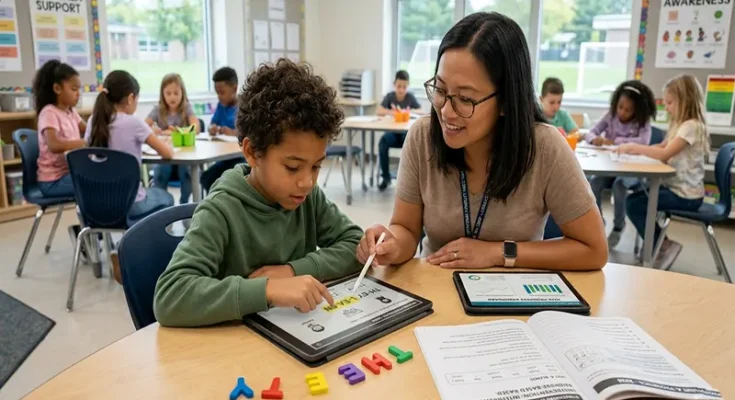
The “Reading Wars” that defined much of the early 21st century have largely concluded. As of March 2026, the global educational landscape has reached a decisive consensus: the Science of Reading is the definitive framework for literacy instruction. For the 20% of the population living with dyslexia, this shift from “balanced literacy” to Structured Literacy is more than a pedagogical trend—it is a neurological necessity. New research released this year continues to underscore that dyslexia is not a reflection of intelligence but a neurobiological condition affecting phonological processing. By implementing evidence-based interventions early and systematically, we are now seeing classrooms where the “reading gap” is no longer an inevitability.

The 2026 Breakthrough: Dyslexia as a “Network Vulnerability”

Groundbreaking research from the University of Houston in early 2026 has reframed our understanding of the dyslexic brain. Moving away from the hunt for a single “faulty gene,” scientists now view dyslexia as …

Evidence-Based Reading Interventions for Students with Dyslexia 2026 Read More

Alternative Credentials and Micro-credentials for Career Advancement 2026

Alternative Credentials and Micro-credentials for Career Advancement 2026

The traditional career trajectory—a linear path fueled by a single four-year degree—is officially a relic of the past. As we move through 2026, the global workforce has pivoted toward a “Skills-First” economy. With the global alternative credentials market projected to reach $21.84 billion this year, the focus has shifted from where you studied to what you can execute right now. For professionals looking to stay competitive, micro-credentials, digital badges, and nano-degrees are no longer just “add-ons”; they are the primary language of career advancement.

The Skills-First Revolution: Why Degrees are No Longer Enough

In 2026, approximately 65% of employers have formally transitioned to skills-based hiring, effectively de-prioritizing the bachelor’s degree as a mandatory screening tool. This shift is driven by the sheer velocity of technological change; traditional academic curricula often take years to update, while a micro-credential can be developed and deployed in weeks to meet a specific market need.…

Alternative Credentials and Micro-credentials for Career Advancement 2026 Read More
AI-Powered Tools for Tracking Measurable IEP Goals: From Data Collection to Compliance

AI-Powered Tools for Tracking Measurable IEP Goals: From Data Collection to Compliance

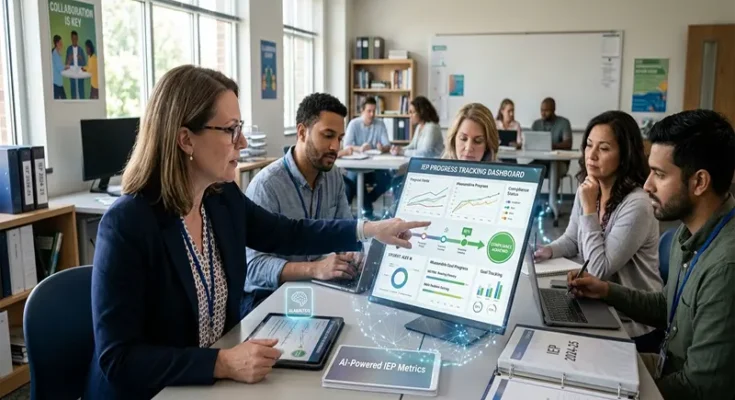
For special education teachers, the Individualized Education Program (IEP) is both a lifeline for students and a mountain of paperwork. Historically, tracking progress toward measurable goals meant a fragmented system of “binders and sticky notes,” where raw data often sat for weeks before being manually graphed into a progress report. As we navigate 2026, the “administrative burden” of special education is being radically reshaped. AI-powered tools are no longer just drafting tools; they are sophisticated data-synthesis engines that ensure every student’s growth is documented with precision and legal compliance.

The Landscape of 2026: Top AI Tools for IEP Management

The current market has moved away from general-purpose AI toward “fit-for-purpose” agents designed specifically for the legal and instructional complexities of the Individuals with Disabilities Education Act (IDEA). Below are four leading tools currently transforming special education workflows.

ToolPrimary StrengthBest For
AbleSpaceMobile-first data collection & automated graphingReal-time
AI-Powered Tools for Tracking Measurable IEP Goals: From Data Collection to Compliance Read More
AI-Driven Personalized Learning Pathways for K-12 Students

AI-Driven Personalized Learning Pathways for K-12 Students

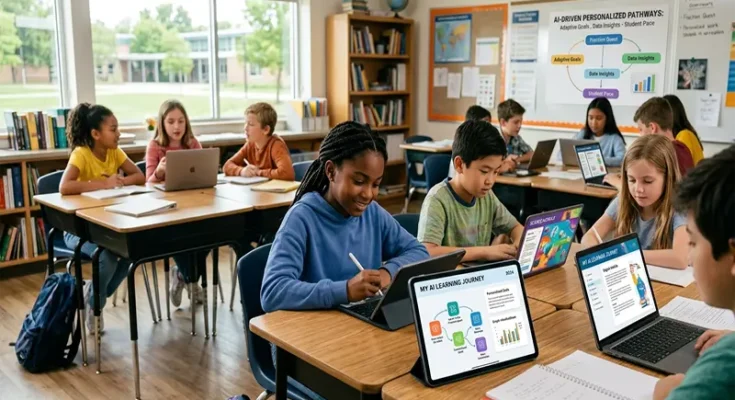
For decades, the “factory model” of education—characterized by a one-size-fits-all curriculum and synchronized pacing—has been the standard in K-12 classrooms. However, as we move through 2026, a fundamental shift is occurring. Artificial Intelligence (AI) is no longer a futuristic concept or a supplementary tool; it has become the architectural foundation for a new era of “one-size-fits-one” education. By leveraging AI-driven personalized learning pathways, schools are finally bridging the gap between theoretical pedagogy and the diverse, real-time needs of every student.

The Mechanics of Personalization: Beyond the Linear Curriculum

At its core, an AI-driven personalized learning pathway is a dynamic educational map that evolves as a student interacts with it. Unlike traditional digital textbooks that offer a linear progression, these systems utilize sophisticated machine learning algorithms and predictive analytics to analyze student behavior in real-time.

These platforms operate within what psychologists call the Zone of Proximal Development (ZPD)—the “sweet spot” …

AI-Driven Personalized Learning Pathways for K-12 Students Read More