

Assistive Technology Accommodations for Inclusive General Education Classrooms: The 2026 Standard

Assistive Technology Accommodations for Inclusive General Education Classrooms: The 2026 Standard

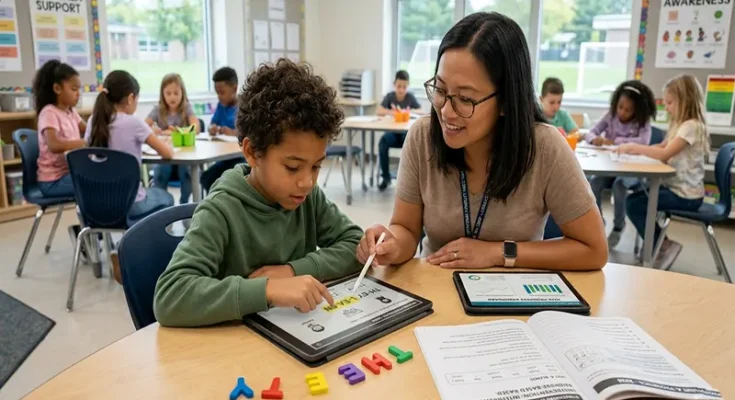
The defining educational shift of the mid-2020s has been the transformation of the General Education classroom into a truly inclusive, neuro-affirming space. As of March 2026, the artificial divide between “specialized” technology for students with disabilities and “standard” technology for everyone else has largely dissolved. We are now witnessing the maturity of Universal Design for Learning (UDL), facilitated by an integrated suite of Assistive Technology (AT). What was once viewed as an “accommodation” for a few is now recognized as a vital, flexible interface for all learners. This phenomenon, known as the “curb-cut effect” in education, acknowledges that tools designed for specific accessibility challenges ultimately improve usability for the entire classroom population.

The 2026 AT Toolkit: Access by Default

The modern AT toolkit in a general education setting is no longer defined by bulky, stigmatizing hardware. Instead, it is characterized by software integration, cloud-based personalization, and AI-powered real-time …

Assistive Technology Accommodations for Inclusive General Education Classrooms: The 2026 Standard Read More
Data-Based Individualization Strategies for Intensive Special Education 2026

Data-Based Individualization Strategies for Intensive Special Education 2026

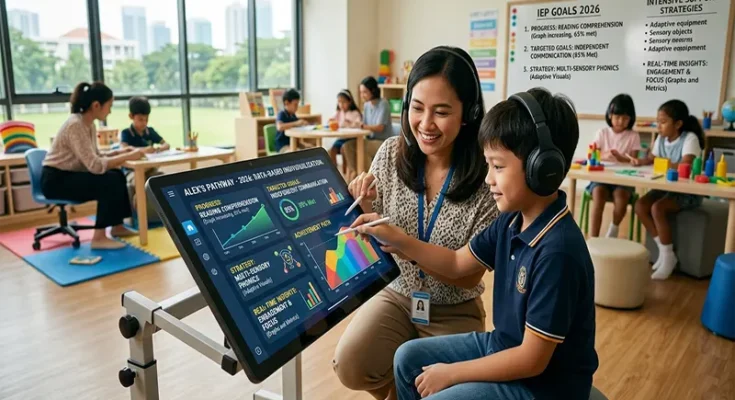
In the landscape of 2026, special education has moved beyond the era of “wait and see.” For students with the most complex learning and behavioral needs, the margin for instructional error is virtually non-existent. Traditional Individualized Education Programs (IEPs) that rely on quarterly or annual reviews are increasingly viewed as insufficient for students requiring intensive support. The current gold standard is Data-Based Individualization (DBI)—a research-driven, high-frequency framework that treats instruction with the precision of clinical medicine. By synthesizing multi-dimensional data streams, educators can now make micro-iterative adjustments to a student’s “instructional dosage” every two to three weeks, ensuring that no student languishes in an ineffective intervention.

The 5-Step DBI Process: A Cycle of Precision

DBI is not a single “product” but a rigorous, evidence-based process for intensifying instruction. In 2026, this cycle is powered by real-time analytics and a “Human-in-the-Loop” (HITL) philosophy.

1. Validated Intervention Program:

The process begins …

Data-Based Individualization Strategies for Intensive Special Education 2026 Read More
Transition Planning Goals for Neurodivergent Students Entering the Workforce

Transition Planning Goals for Neurodivergent Students Entering the Workforce

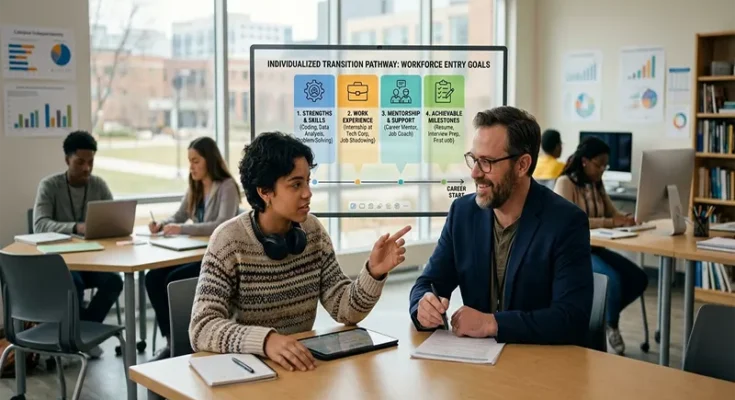
The transition from the structured, highly accommodated environment of K–12 education to the autonomous world of employment is often described as a “cliff” for neurodivergent students. Whether a student is autistic, has ADHD, dyslexia, or executive functioning challenges, the leap requires more than just job skills; it requires a specialized set of “transition goals” that bridge the gap between potential and professional success.

As of March 2026, the corporate landscape has shifted significantly. With nearly 85% of Fortune 500 companies now boasting dedicated neuro-inclusion programs, the focus is no longer on “fixing” the student to fit a rigid mold. Instead, modern transition planning is about identifying the “Right Fit” environment and equipping the student with the self-advocacy and technological tools to thrive within it.

The Foundation: Self-Advocacy and Disclosure Mastery

The most critical goal in any transition plan is the mastery of self-advocacy. In the workplace, accommodations are not automatically …

Transition Planning Goals for Neurodivergent Students Entering the Workforce Read More
Evidence-Based Reading Interventions for Students with Dyslexia 2026

Evidence-Based Reading Interventions for Students with Dyslexia 2026

The “Reading Wars” that defined much of the early 21st century have largely concluded. As of March 2026, the global educational landscape has reached a decisive consensus: the Science of Reading is the definitive framework for literacy instruction. For the 20% of the population living with dyslexia, this shift from “balanced literacy” to Structured Literacy is more than a pedagogical trend—it is a neurological necessity. New research released this year continues to underscore that dyslexia is not a reflection of intelligence but a neurobiological condition affecting phonological processing. By implementing evidence-based interventions early and systematically, we are now seeing classrooms where the “reading gap” is no longer an inevitability.

The 2026 Breakthrough: Dyslexia as a “Network Vulnerability”

Groundbreaking research from the University of Houston in early 2026 has reframed our understanding of the dyslexic brain. Moving away from the hunt for a single “faulty gene,” scientists now view dyslexia as …

Evidence-Based Reading Interventions for Students with Dyslexia 2026 Read More
AI-Powered Tools for Tracking Measurable IEP Goals: From Data Collection to Compliance

AI-Powered Tools for Tracking Measurable IEP Goals: From Data Collection to Compliance

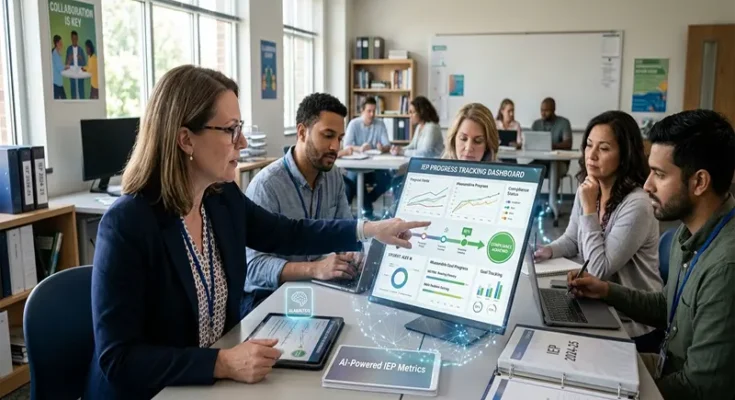
For special education teachers, the Individualized Education Program (IEP) is both a lifeline for students and a mountain of paperwork. Historically, tracking progress toward measurable goals meant a fragmented system of “binders and sticky notes,” where raw data often sat for weeks before being manually graphed into a progress report. As we navigate 2026, the “administrative burden” of special education is being radically reshaped. AI-powered tools are no longer just drafting tools; they are sophisticated data-synthesis engines that ensure every student’s growth is documented with precision and legal compliance.

The Landscape of 2026: Top AI Tools for IEP Management

The current market has moved away from general-purpose AI toward “fit-for-purpose” agents designed specifically for the legal and instructional complexities of the Individuals with Disabilities Education Act (IDEA). Below are four leading tools currently transforming special education workflows.

ToolPrimary StrengthBest For
AbleSpaceMobile-first data collection & automated graphingReal-time
AI-Powered Tools for Tracking Measurable IEP Goals: From Data Collection to Compliance Read More