

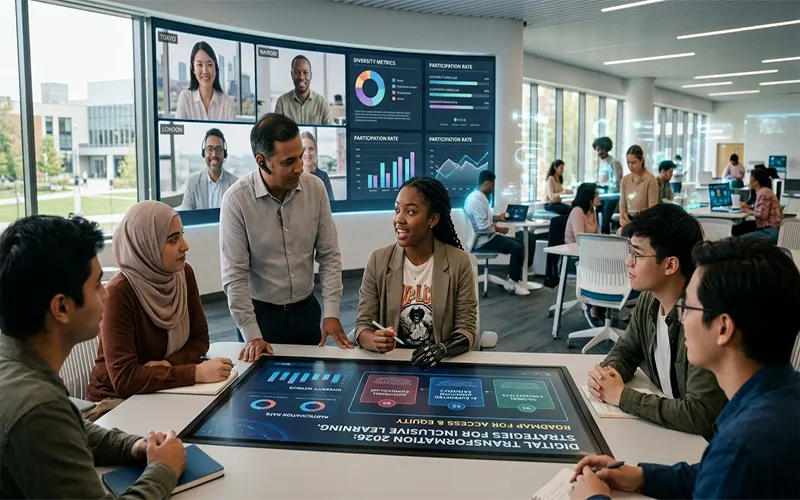
The definition of digital transformation in higher education has undergone a fundamental shift. In the early 2020s, the focus was primarily on “digitization”—moving analog processes online and adopting new technological tools. As we navigate the landscape of March 2026, the mandate has evolved from simple digitization to digital inclusion. For institutions of higher learning, true transformation is no longer just a technical upgrade; it is a profound cultural realignment, one that recognizes technology as the essential architecture for equity and access in a hybrid world.
This evolution is driven partly by urgency. Across the United States and Europe, new, stringent regulatory deadlines for web and mobile accessibility (such as the ADA and EN 301 549 updates) have come into force this Spring. However, beyond legal mandates, the 2026 landscape is defined by the “Stability Paradox”: the realization that foundational, stable IT systems—like Identity and Access Management (IAM) and robust enterprise platforms—are now as crucial to an inclusive student experience as the most advanced AI applications.
Universal Design for Learning (UDL) by Design
Inclusive higher education in 2026 is moving definitively away from a model of reactive “accommodations” and toward “inclusive-by-design” curricula. This approach is rooted in the Universal Design for Learning (UDL) framework, which calls for proactive accessibility built into the very fabric of instruction.
To achieve this at an institutional level, digital transformation strategies must prioritize:
- Multiple Means of Engagement: Providing varied ways to motivate students, such as gamified learning modules, interactive simulations, and collaborative digital workspaces that allow for both synchronous and asynchronous participation.
- Multiple Means of Representation: Ensuring content is presented in various formats—text, video with accurate captions, audio, and interactive media. In 2026, a university’s digital repository is expected to automatically offer a student a choice of formats upon downloading a learning resource.
- Multiple Means of Action & Expression: Allowing students multiple ways to demonstrate their knowledge. Digital platforms must support diverse assessment types, from traditional essays (supported by AI writing assistants) to video presentations, e-portfolios, and oral exams conducted via secure video link.
AI as an Accessibility Powerhouse
The most significant accelerator of digital inclusion in 2026 is Artificial Intelligence. Research from the past year shows that when implemented strategically, AI-powered personalized learning paths increase student engagement by nearly 60%. AI is shifting the paradigm from standardized content to dynamic support that adjusts to the individual learner in real-time.
Key AI applications currently driving inclusion include:
- Automated Real-Time Transcription & Translation: These tools have become ubiquitous in lectures and seminars. They provide instantaneous, accurate captions for students with hearing impairments and real-time translation for English Language Learners (ELL), allowing non-native speakers to fully engage with complex academic material without the lag of traditional translation methods.
- 24/7 AI Tutors and Co-pilots: These intelligent assistants offer “just-in-time” support, guiding students through difficult concepts at 3:00 AM or answering administrative queries instantly. This is vital for non-traditional students, working parents, and those in remote time zones who cannot access traditional on-campus support services during standard business hours.
Bridging the Multi-Level Digital Divide
A transformation strategy that fails to address the persistent digital divide will only exacerbate existing inequalities. Recent 2026 research identifies three critical levels of digital inequality that institutions must actively bridge:
- Level 1: The Access Gap: The most foundational divide remains access to reliable, high-speed connectivity and appropriate hardware. Forward-thinking universities are implementing “device-as-a-service” programs, ensuring every student has a standardized, high-functioning laptop and, where necessary, subsidized broadband access.
- Level 2: The Digital Literacy and Self-Efficacy Gap: Access to technology is meaningless without the skills to use it effectively. Inclusion strategies must integrate digital literacy training into the student onboarding process and provide ongoing support. We must bridge the “confidence gap,” ensuring students from all backgrounds feel capable of leveraging new digital tools for academic success.
- Level 3: The Career-Readiness Skill Gap: The highest level of the divide is the ability to use advanced technologies (like Generative AI or data analytics) for professional application. Inclusive digital transformation ensures that all students, not just those in technical disciplines, graduate with the digital fluency required for the 2026 workforce.
Data Ethics and the ‘Black Box’ of Inclusion
As institutions rely more heavily on data-driven systems, the urgent dialogue of 2026 centers on algorithmic bias and the ethics of data usage. While AI-driven “early warning systems” are invaluable for identifying students at risk of dropping out, they carry the significant risk of reinforcing existing biases if their “black box” logic inadvertently marginalizes underprivileged demographics.
To combat this, digital inclusion strategies must include robust data governance frameworks. Institutions must prioritize “explainable AI” (XAI)—systems where the decision-making logic is transparent to educators. We must ensure that automated alerts spark human intervention, rather than automated penalties, maintaining a “human-in-the-loop” to interpret data within a student’s unique context.
Human-Centered Leadership: The Cultural Catalyst
The most significant hurdle to inclusive digital transformation is rarely technical; it is cultural. Faculty and staff require empathetic leadership and professional development to navigate this shift.
Rather than increasing workloads, effective transformation uses automation to free up human time. By automating mechanical tasks like grading basic assessments, basic query handling, and administrative workflows, faculty are empowered to focus on “the human edge”—mentorship, deep-level teaching, and fostering a sense of belonging. The digital strategy must position technology not as a replacement for human connection, but as the facilitator of it.
A Vision for Global Digital Public Goods
In 2026, the benchmark for a successful university is no longer its exclusivity, but its accessibility. Digital transformation offers the unprecedented opportunity to democratize high-quality higher education, provided we move beyond national borders.
There is a growing call for the creation of Digital Public Goods—open-source platforms, inclusive datasets, and shared instructional resources that can be leveraged by institutions in both the Global North and Global South. By sharing the architecture of inclusion, we ensure that the profound benefits of digital transformation are not restricted by geography or endowment, but rather serve as a global engine for equity, opportunity, and lifelong learning.