
Developing Human-Centered Power Skills in the AI Era

Developing Human-Centered Power Skills in the AI Era

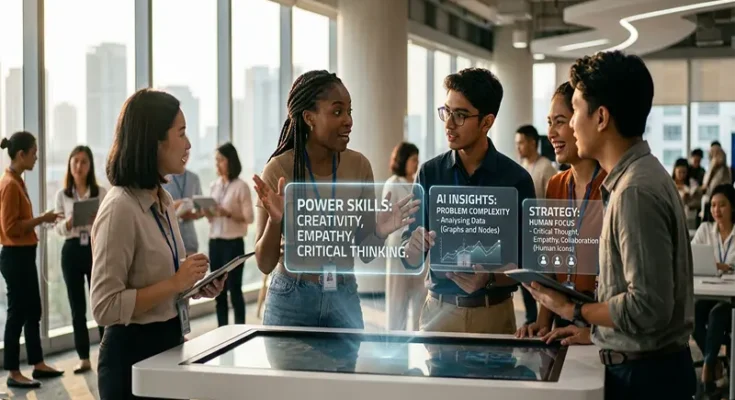
In the early 2020s, the primary anxiety of the global workforce was technical obsolescence—the fear that AI would learn to code, write, and analyze faster than any human could. As we move through 2026, that fear has been replaced by a “Skills Paradox.” As Artificial Intelligence becomes more “human-like” in its output—generating flawlessly composed emails, sophisticated data models, and even realistic digital art—the most valuable assets in the labor market are no longer technical. Instead, the hard currency of the modern era is Power Skills: the deeply human, irreplaceable traits of empathy, ethical judgment, and strategic intuition.

The shift is clear: when the “How” of a task (execution) is commoditized by AI, the “Why” (intent) and the “Should” (ethics) become the ultimate differentiators of professional success.

The Four Pillars of Power Skills in 2026

To remain relevant in an AI-saturated economy, professionals must pivot away from tasks that rely …

Developing Human-Centered Power Skills in the AI Era Read More


Transition Planning Goals for Neurodivergent Students Entering the Workforce

Transition Planning Goals for Neurodivergent Students Entering the Workforce

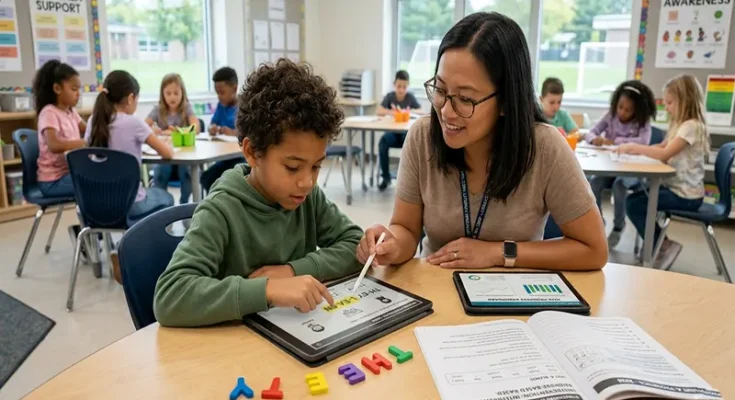
The transition from the structured, highly accommodated environment of K–12 education to the autonomous world of employment is often described as a “cliff” for neurodivergent students. Whether a student is autistic, has ADHD, dyslexia, or executive functioning challenges, the leap requires more than just job skills; it requires a specialized set of “transition goals” that bridge the gap between potential and professional success.

As of March 2026, the corporate landscape has shifted significantly. With nearly 85% of Fortune 500 companies now boasting dedicated neuro-inclusion programs, the focus is no longer on “fixing” the student to fit a rigid mold. Instead, modern transition planning is about identifying the “Right Fit” environment and equipping the student with the self-advocacy and technological tools to thrive within it.

The Foundation: Self-Advocacy and Disclosure Mastery

The most critical goal in any transition plan is the mastery of self-advocacy. In the workplace, accommodations are not automatically …

Transition Planning Goals for Neurodivergent Students Entering the Workforce Read More
Digital Transformation Strategies for Inclusive Higher Education 2026

Digital Transformation Strategies for Inclusive Higher Education 2026

The definition of digital transformation in higher education has undergone a fundamental shift. In the early 2020s, the focus was primarily on “digitization”—moving analog processes online and adopting new technological tools. As we navigate the landscape of March 2026, the mandate has evolved from simple digitization to digital inclusion. For institutions of higher learning, true transformation is no longer just a technical upgrade; it is a profound cultural realignment, one that recognizes technology as the essential architecture for equity and access in a hybrid world.

This evolution is driven partly by urgency. Across the United States and Europe, new, stringent regulatory deadlines for web and mobile accessibility (such as the ADA and EN 301 549 updates) have come into force this Spring. However, beyond legal mandates, the 2026 landscape is defined by the “Stability Paradox”: the realization that foundational, stable IT systems—like Identity and Access Management (IAM) and robust …

Digital Transformation Strategies for Inclusive Higher Education 2026 Read More
Evidence-Based Reading Interventions for Students with Dyslexia 2026

Evidence-Based Reading Interventions for Students with Dyslexia 2026

The “Reading Wars” that defined much of the early 21st century have largely concluded. As of March 2026, the global educational landscape has reached a decisive consensus: the Science of Reading is the definitive framework for literacy instruction. For the 20% of the population living with dyslexia, this shift from “balanced literacy” to Structured Literacy is more than a pedagogical trend—it is a neurological necessity. New research released this year continues to underscore that dyslexia is not a reflection of intelligence but a neurobiological condition affecting phonological processing. By implementing evidence-based interventions early and systematically, we are now seeing classrooms where the “reading gap” is no longer an inevitability.

The 2026 Breakthrough: Dyslexia as a “Network Vulnerability”

Groundbreaking research from the University of Houston in early 2026 has reframed our understanding of the dyslexic brain. Moving away from the hunt for a single “faulty gene,” scientists now view dyslexia as …

Evidence-Based Reading Interventions for Students with Dyslexia 2026 Read More
Alternative Credentials and Micro-credentials for Career Advancement 2026

Alternative Credentials and Micro-credentials for Career Advancement 2026

The traditional career trajectory—a linear path fueled by a single four-year degree—is officially a relic of the past. As we move through 2026, the global workforce has pivoted toward a “Skills-First” economy. With the global alternative credentials market projected to reach $21.84 billion this year, the focus has shifted from where you studied to what you can execute right now. For professionals looking to stay competitive, micro-credentials, digital badges, and nano-degrees are no longer just “add-ons”; they are the primary language of career advancement.

The Skills-First Revolution: Why Degrees are No Longer Enough

In 2026, approximately 65% of employers have formally transitioned to skills-based hiring, effectively de-prioritizing the bachelor’s degree as a mandatory screening tool. This shift is driven by the sheer velocity of technological change; traditional academic curricula often take years to update, while a micro-credential can be developed and deployed in weeks to meet a specific market need.…

Alternative Credentials and Micro-credentials for Career Advancement 2026 Read More